
.png)


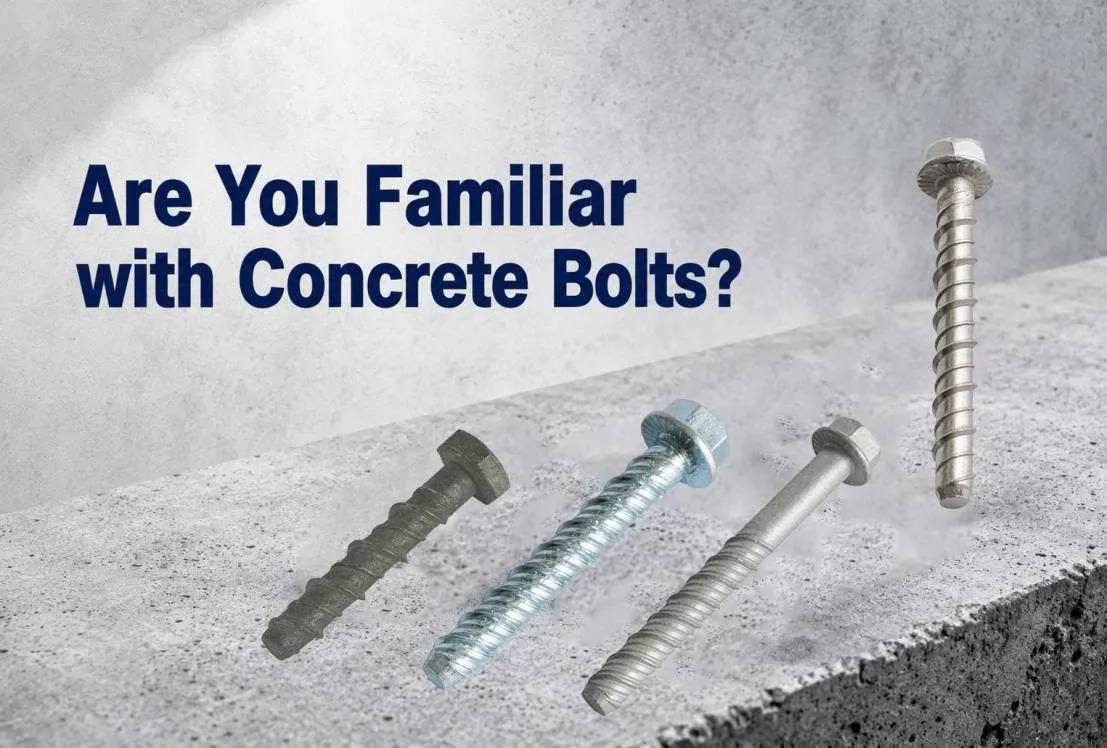
Are You Familiar with Concrete Bolts?
What are the differences in common materials for concrete bolts?
Common materials for concrete bolts (such as expansion bolts) mainly include ordinary carbon steel, alloy structural steel, and stainless steel, with common surface treatments like electro-galvanization or hot-dip galvanization. Carbon steel (e.g., Q235, Q345, strength grades 4.8–10.9) is the most cost-effective and has high strength, but poor corrosion resistance. Zinc plating or coatings are usually applied for rust protection. Alloy steel (e.g., 40Cr, 35CrMo, with added Mo) has high hardness and strength up to grade 12.9, with excellent fatigue and high-temperature performance, often used in heavy-duty applications, but it is expensive and requires heat treatment. Stainless steel, primarily 304 (A2 grade) and 316 (A4 grade), offers the lowest corrosion rate in chloride-containing environments when using 316 with molybdenum, making it suitable for chemical plants, coastal areas, etc., although its cost is significantly higher than carbon steel.
- Carbon Steel (Galvanized): Low cost, high load capacity, but corrodes rapidly in humid or saline-alkaline environments.
- Alloy Steel (40Cr/35CrMo): Extremely high strength, wear-resistant, and fatigue-resistant.
- Stainless Steel 304/316: Excellent corrosion resistance and long service life.
What are the types of drillable concrete, and what are the construction considerations?
Common concrete/cement substrates include: normal concrete (dense with high load-bearing capacity); lightweight concrete/aerated concrete (high porosity, low self-weight, with slightly reduced anchorage strength); hollow blocks/hollow slabs (contain cavities, making them less capable of resisting wedge expansion forces); and precast concrete elements (high-quality material but may contain reserved channels or reinforcing mesh). Drilling and anchoring requirements vary depending on the substrate type.
Drill Diameter and Depth
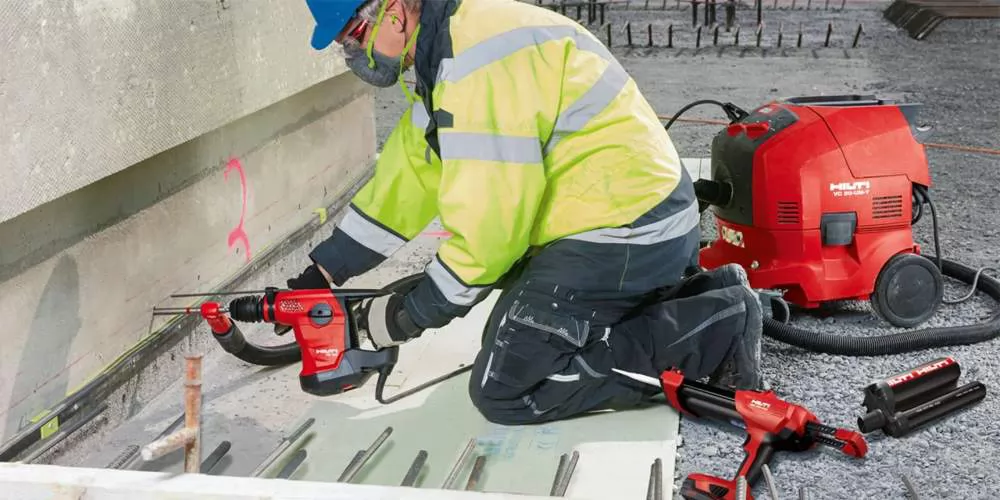
Use a carbide-tipped SDS rotary hammer drill bit. The drill bit diameter should match the nominal diameter of the anchor. For example, an M12 expansion anchor requires a 12 mm drill bit (note that some expansion sleeves may require a slightly larger hole). The drill depth should exceed the anchor's embedment depth by approximately 25–30 mm to accommodate the anchoring material and dust. When drilling, maintain vertical pressure, and periodically withdraw the drill bit to remove debris.
Hole Cleaning and Dust Removal
After drilling, thoroughly remove all concrete dust from the hole, as residual dust can significantly reduce the anchorage capacity of both mechanical expansion anchors and chemical adhesive anchors. Hilti recommends the standard "blow–brush–blow–brush–blow" procedure, which is particularly critical for chemical anchors. If a dust extraction system is available on-site, it can be used simultaneously during drilling (e.g., Hilti SafeSet system).
Hole Moisture
Water accumulation or high humidity inside the hole can interfere with the curing of chemical adhesives (inhibiting resin polymerization), and a wet hole can also reduce the frictional resistance of mechanical expansion anchors. It is recommended to remove surface water before drilling and to blow out any remaining moisture from the hole afterward. In particularly humid environments, adhesives that cure in damp conditions, such as polyurethane-based resins, are advisable.
Avoid Cracks and Reinforcement
Before drilling, mark the intended location with a center punch and use a rebar detector to check for steel reinforcement. Drilling into reinforcement will severely reduce the performance of standard expansion anchors (preventing full expansion), whereas chemical anchors can bond with both the rebar and surrounding concrete. For cracked concrete zones, certified crack-resistant anchors should be used (e.g., Hilti HST3/HUS rated for cracked concrete). In all load tests, it is assumed that the concrete is uncracked; if structural cracks are present, only ETA- or ICC-ES-certified crack-resistant anchors should be used.
Are you familiar with the installation methods and load-bearing capacity of concrete bolts?
Mechanical Expansion Anchors (Dry Installation)
Common types include wedge anchors, sleeve anchors, and stamped studs. Installation involves inserting the anchor with its expansion sleeve into a clean hole, then either hammering it in or tightening the nut with a torque wrench to expand the sleeve and lock the anchor in the substrate. Installation is straightforward, and load capacity relies on friction. Suitable for uncracked concrete, they can resist high tensile and shear forces, though over-tightening may cause concrete cracking. Load capacity depends on embedment depth, anchor diameter, and applied pre-tension torque, and is typically specified in the manufacturer's documentation.
Chemical/Adhesive Anchors (Wet Curing)
Also called bonded anchors, these use epoxy, polyurethane, or hybrid adhesives to bond the anchor rod or bolt to the hole wall. Prior to application, thorough hole cleaning is essential (see above). The adhesive is injected into the hole, and the rod is inserted and rotated to ensure full coverage. Once cured, the anchor achieves very high bond strength. Chemical anchors do not rely on metal expansion mechanisms and perform well in cracked concrete (certified products required). They offer high durability and can be used in hollow or cracked concrete, but installation is more complex, curing time is longer, and performance is sensitive to environmental conditions (temperature and humidity). Improper mixing or exceeding the working time can lead to failure.
Load Capacity Comparison
Generally, chemical anchors provide higher tensile strength and superior seismic performance compared with mechanical expansion anchors. Mechanical anchors are suitable for securing light to medium equipment and canopies, whereas chemical anchors are preferred for structural connections subject to heavy loads. Shear strength is typically higher for mechanical anchors, but chemical anchors exhibit more stable performance under vibration and fatigue loading. Specific load values can be obtained from manufacturer certification reports (e.g., ETA, ACI).
How to Properly Use Concrete Bolts?
Extending Service Life
Select appropriate materials based on the environment (e.g., stainless steel or galvanized alloys in corrosive conditions). Before installation, check hole diameter and concrete strength. During installation, tighten with a torque wrench according to specifications. Anti-corrosion lubricants may be applied to protect threads. Avoid over-tightening, which can crack the concrete. After installation, protect exposed anchor rods with covers or apply galvanized paint.
On-Site Inspection Procedures
Conduct regular visual inspections for corrosion, loosening, or nut torque. Use a torque wrench to verify the fastening status of critical anchors (e.g., torque should not fall below specified assembly values). Where possible, perform load tests on key anchors using pull-out devices to confirm sufficient residual load capacity. Anchors showing loosening or significant surface corrosion should be retightened or replaced.
Replacement Criteria
Common signs of anchor failure include excessive corrosion, thread wear, anchor breakage, anchor body detachment, or concrete spalling. Immediate removal and replacement are required if insufficient rod torque, concrete chipping around the hole, internal anchor fractures, or other hidden defects are detected. Anchors should also be replaced if load test results are below required values. After installation, industry acceptance standards (e.g., ACI, EN) should be followed, including load verification of critical anchorage points.
Common Failure Modes
Expansion anchors may fail due to overload or material fatigue. Loosening typically results from insufficient torque or vibration. Corrosion can reduce rod cross-sectional area, while concrete edge failure or collapse of porous substrates can lead to anchorage loss. To prevent failure, maintain adequate edge and spacing distances, use high-strength fatigue-resistant anchors, and ensure proper anti-corrosion coatings and sealing maintenance.
Summary and Recommendations
Concrete anchors require differentiated selection and application methods depending on substrate conditions and working environments. In engineering practice, selection should be based on a comprehensive assessment of environmental corrosion class, load characteristics, and base material type. For standard concrete structures, galvanized carbon steel expansion anchors are generally preferred. In highly corrosive or seismic applications, stainless steel anchors or chemical anchors are recommended. For hollow blocks, chemical injection anchors or expansion anchors used together with dedicated mesh sleeves or plugs should be applied.
During field maintenance, anchor conditions should be regularly inspected, and any aged or damaged components should be replaced promptly. The attached table summarizes the comparison between common material/anchor types and their reusability, serving as a reference for on-site selection.
Material / Anchor Type Comparison
| Material / Anchor Type | Example | Suitable Concrete Type | Reusability |
|---|---|---|---|
| Carbon Steel (Galvanized) Expansion Anchor | Wedge bolts, sleeve anchors | Ordinary concrete, precast concrete | Generally no, single-use |
| Alloy Steel Expansion Anchor | Heavy-duty expansion bolts | High-strength concrete | No, single-use |
| Stainless Steel Screw Anchor (HUS4) | Removable screw anchor | Hollow, aerated, cracked concrete | Yes, reusable |
| Chemical Anchors (Epoxy/PU) | Epoxy anchors, PU anchors | All concrete types | No, not reusable |